Choosing the Right SVG and DXF Snow Globe Designs Featuring Deer for Christmas Crafts
The holiday season brings a surge of creative energy, prompting crafters, designers, and small business owners to seek high-quality digital assets that capture the essence of winter wonder. Among the most popular motifs are snow globes, particularly those featuring silhouettes of deer and Christmas trees. When evaluating resources for these projects, understanding the technical distinctions between file formats like SVG and DXF is crucial. A well-curated collection of SVG, DXF Snow Globe, Merry Christmas, deer designs offers versatility, but selecting the right package requires looking beyond the aesthetic appeal to consider resolution, compatibility, and intended application.
Understanding File Formats: SVG vs. DXF vs. Raster Images
For those new to digital crafting, the array of file types can be overwhelming. Each format serves a specific purpose, and knowing when to use which can significantly impact the quality of your final product. The core of any professional design bundle should include vector files, specifically SVG (Scalable Vector Graphics) and DXF (Drawing Exchange Format), alongside high-resolution raster images like PNG and JPEG.
SVG files are the gold standard for modern cutting machines such as Cricut and Silhouette. They are vector-based, meaning they use mathematical paths rather than pixels. This allows the image to be scaled up or down infinitely without losing clarity or becoming pixelated. For a Silhouette Snow Globe design, this scalability is vital if you plan to resize the graphic from a small ornament to a large wall decal.
DXF files, on the other hand, are often preferred by users of older software or specific industrial cutting machines. Like SVGs, they are vector-based and maintain crisp edges at any size. However, DXF files do not support color information in the same way SVGs do, making them ideal for single-color cutouts where the focus is purely on the shape and line work. If your workflow involves basic CAD software or legacy cutting plotters, having DXF options ensures compatibility.
In contrast, PNG and JPEG files are raster images, composed of pixels. The value of these files lies in their resolution. A standard web image might be 72 DPI (dots per inch), which is insufficient for printing. High-quality bundles provide these at 300 DPI. For instance, receiving files at 1748x2000 pixels (approximately 3.5 megapixels) ensures that when printed on physical products like t-shirts, mugs, or pillows, the image remains sharp and detailed. PNGs with transparent backgrounds are particularly useful for sublimation printing or digital overlays, while JPEGs with white backgrounds are ready for standard document insertion or print-on-demand services that require a solid base.
Evaluating Design Quality and Resolution
When comparing different Merry Christmas design craft resources, resolution is a primary indicator of quality. A common pitfall for beginners is purchasing low-resolution assets that look acceptable on a screen but appear blurry or jagged when printed. A specification of 300 DPI is the industry standard for professional printing. At this density, the human eye cannot easily distinguish individual dots, resulting in smooth gradients and crisp lines.
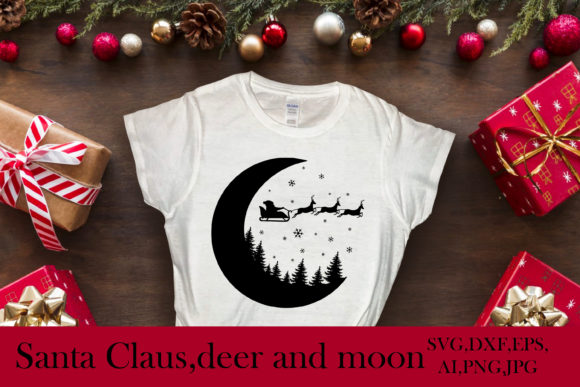
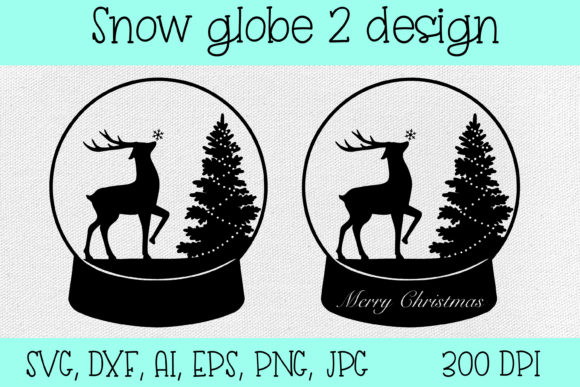
Consider the complexity of a deer and Christmas tree silhouette within a snow globe. Intricate details, such as the branches of the tree or the antlers of the deer, can easily become lost if the file resolution is too low or if the vector nodes are poorly optimized. High-quality AI and EPS files, typically included in premium bundles, allow for advanced editing in programs like Adobe Illustrator. These formats preserve all vector data, enabling designers to modify individual elements, adjust curves, or separate layers for multi-color projects.
The inclusion of multiple file types—such as two AI files, two EPS files, two PNGs, two JPEGs, two SVGs, and DXF files—provides a comprehensive toolkit. This variety ensures that regardless of your software preference, whether it is CorelDRAW, Adobe Photoshop, Inkscape, or a proprietary cutting machine interface, you have a compatible file ready to use. This redundancy is not just about convenience; it is about ensuring workflow continuity. If one file type becomes corrupted or incompatible with a software update, alternatives are immediately available.
Application Versatility: From Ornaments to Apparel
The true test of a digital design bundle is its versatility across different mediums. A robust SVG, DXF Snow Globe, Merry Christmas, deer collection should be adaptable to various projects. Here is how different formats excel in specific applications:
- Vinyl Cutting and Decals: SVG and DXF files are essential here. They allow cutting machines to trace the exact outline of the snow globe and the internal deer silhouette. This is ideal for creating window decals, laptop stickers, or custom labels for holiday gifts.
- Sublimation Printing: For items like mugs, towels, and polyester t-shirts, high-resolution PNG files with transparent backgrounds are paramount. The transparency allows the design to blend seamlessly onto the product without a visible white box around the snow globe. The 300 DPI resolution ensures the intricate details of the deer and tree remain clear after the heat transfer process.
- Direct-to-Garment (DTG) and Iron-On Transfers: JPEG files with white backgrounds can be useful for certain transfer papers that require a solid background to adhere properly. Alternatively, PNGs can be used with printable vinyl for custom iron-ons.
- Wood and Paper Crafts: Laser cutters and die-cutting machines rely on vector paths. Using SVG or DXF files, crafters can cut out the snow globe shape from wood, acrylic, or cardstock. These cutouts can then be assembled into layered ornaments, where different layers represent the glass globe, the snow, and the deer silhouette, creating a 3D effect.
- Digital Coloring and Illustration: For those who enjoy hand-coloring or digital painting, the black-and-white line art versions (often found in SVG or high-contrast PNGs) serve as excellent templates. Users can import these into Photoshop or Procreate to add custom colors, shading, and textures, transforming a simple silhouette into a unique piece of art.
Tradeoffs and Decision Factors
While having a comprehensive bundle is advantageous, it is important to recognize when a specific format might not be the best fit. For example, if you are working exclusively with a cutting machine that only accepts proprietary formats, you may need to convert SVG or DXF files, which can sometimes result in minor path errors. In such cases, starting with a clean, simple SVG is better than a complex EPS file that may contain unsupported effects.
Another consideration is the level of customization required. If you plan to significantly alter the design, such as changing the shape of the snow globe or adding additional elements, AI and EPS files are superior because they are native to vector editing software. SVGs are editable but can be more cumbersome to manipulate in depth compared to AI files in Illustrator. Conversely, if you only need to resize and print the image as-is, PNG and JPEG files are simpler and faster to use, requiring no specialized vector software.
Cost versus utility is also a factor. Free resources often provide limited formats, usually just PNGs or low-quality SVGs. Investing in a paid bundle that includes 1748x2000 px images and multiple vector formats ensures professional results. However, buyers should assess whether they will actually use all the provided formats. If a crafter never uses laser cutters, the DXF files may be redundant. Yet, having them available future-proofs the purchase, allowing for expansion into new crafting techniques without needing to buy new assets.
Best Practices for Implementation
To maximize the value of your Silhouette Snow Globe and deer designs, consider these practical tips:
- Check Compatibility: Before purchasing, verify that your software supports the included file types. Most modern cutting software handles SVGs well, but older systems may require DXF.
- Test Print Small: When using PNG or JPEG files for physical products, print a small test version first to check color accuracy and sharpness. Adjust brightness and contrast in your image editor if necessary.
- Layering for Depth: For paper crafts, use the vector files to cut multiple layers. Use thicker cardstock for the base and thinner paper for detailed inner layers like the deer and tree to create visual depth.
- Color Customization: Use the transparent PNGs as bases in digital design tools. Experiment with different color palettes to match specific brand identities or home decor themes, moving beyond traditional red and green to incorporate blues, silvers, or golds.
In conclusion, selecting the right digital assets for holiday crafts involves balancing technical requirements with creative goals. A comprehensive package containing SVG, DXF Snow Globe, Merry Christmas, deer designs, along with high-resolution raster images, provides the flexibility needed for a wide range of projects. By understanding the strengths of each file format and matching them to your specific tools and end products, you can ensure high-quality, professional results whether you are creating custom ornaments, apparel, or digital art. Always prioritize resolution and format compatibility to avoid common pitfalls and make the most of your creative resources.