Choosing Delicate Gorgeous Floral Backgrounds for Professional and Personal Design Projects
In the evolving landscape of digital design, the demand for high-quality, versatile assets has never been higher. Whether you are a graphic designer crafting a brand identity, a photographer looking to enhance portrait backdrops, or a hobbyist scrapbooker preserving memories, the foundation of your project often relies on the quality of your background elements. Delicate Gorgeous Floral Backgrounds represent a specific niche within digital textures that prioritizes intricate detail, soft aesthetics, and extreme print quality. Created with a specialized collection of Procreate brushes, these assets offer a unique blend of organic artistry and technical precision.
When evaluating design resources, it is essential to look beyond surface-level aesthetics. This article explores the distinct characteristics of these floral backgrounds, compares them to alternative design approaches, and provides practical guidance on when and how to integrate them into your workflow.
Understanding the Distinct Quality of Procreate-Created Textures
The term "delicate" in design often implies fragility, but in the context of digital assets, it refers to nuance. Delicate Gorgeous Floral Backgrounds are characterized by subtle gradients, fine line work, and a naturalistic approach to color blending. Unlike generic stock photography, which can sometimes feel sterile or over-processed, these backgrounds are hand-crafted using digital painting tools. Specifically, the use of custom Procreate brushes allows for a texture that mimics traditional media—such as watercolor, charcoal, or ink—while retaining the scalability and clarity of digital files.
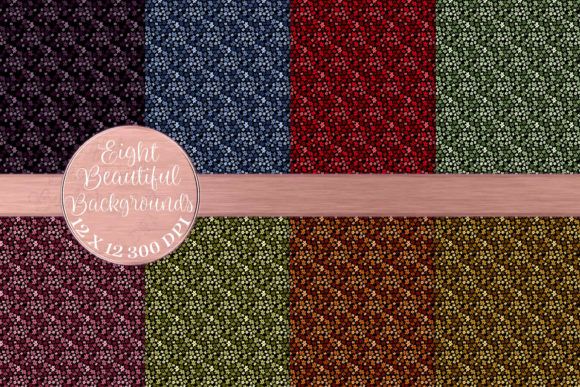
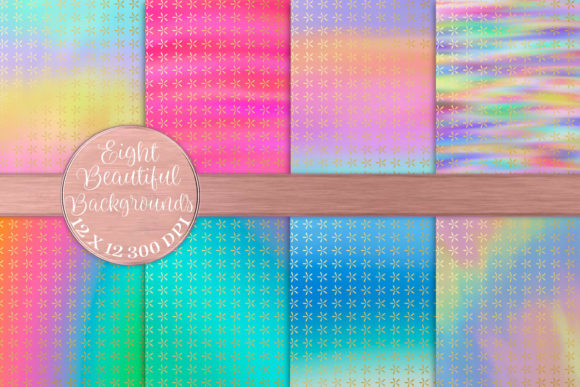
The technical specifications play a crucial role in their utility. Each image in this collection is rendered at 3000 x 3000 pixels with a resolution of 300 DPI (dots per inch). This is a critical distinction for users who intend to print their designs. Many free or low-cost digital backgrounds are optimized only for screen viewing (72 DPI), which results in pixelation and blurriness when printed on physical media. By maintaining a high DPI, these floral backgrounds ensure that every petal and leaf remains crisp, whether viewed on a retina display or printed on heavy cardstock.
Comparing Digital Painted Backgrounds to Stock Photography
When sourcing background elements, designers typically choose between three main categories: stock photography, vector graphics, and digital painted textures. Understanding the tradeoffs between these options helps determine if Delicate Gorgeous Floral Backgrounds are the right fit for your specific project.
- Stock Photography: Real photographs offer undeniable realism. However, they often come with lighting constraints, limited color palettes, and complex backgrounds that make overlaying text difficult. Additionally, licensing for commercial use can be restrictive and expensive.
- Vector Graphics: Vectors are infinitely scalable and ideal for logos or geometric patterns. Yet, they often lack the organic warmth and textural depth required for emotional or nostalgic designs. They can appear flat or overly clinical.
- Digital Painted Textures: This category, where these floral backgrounds reside, offers a middle ground. They provide the organic feel of photography with the artistic control of illustration. The hand-brushed details add a human touch that resonates well in industries like wedding planning, boutique branding, and personal stationery.
For projects requiring a soft, romantic, or artisanal feel, digital painted backgrounds often outperform both stock photos and vectors. They allow for easier integration of text and other design elements because the artist can control the density and placement of the floral motifs, leaving negative space intentionally for content.
Practical Applications Across Industries
The versatility of Delicate Gorgeous Floral Backgrounds extends far beyond simple desktop wallpapers. Because the files are provided as high-resolution JPGs, they can be adapted for a wide range of physical and digital products. Here is how different professionals can leverage these assets:
For Scrapbookers and Paper Crafters
Scrapbooking relies heavily on texture and theme. These backgrounds serve as excellent printable scrapbook paper. Users can print them on standard photo paper or specialty matte finishes to create unique pages that do not look mass-produced. The 300 DPI resolution ensures that the delicate details survive the printing process without losing definition. Furthermore, these images can be used as bases for layered layouts, where photos and embellishments are added on top.
For Graphic Designers and Brand Strategists
Designers often need cohesive visual elements for client projects. These floral textures can be used as backgrounds for social media posts, website headers, or email newsletters. The soft aesthetic is particularly effective for brands in the beauty, wellness, and lifestyle sectors. Additionally, designers can isolate specific floral elements from the background to create custom icons or decorative borders, maximizing the value of a single asset.
For Product Customization and Print-on-Demand
The rise of print-on-demand services has made it easier than ever to turn digital art into physical goods. These backgrounds are suitable for creating vibrant wrapping paper, custom magnets, tote bags, and even apparel like T-shirts. When designing for fabric or hard surfaces, the seamless nature of some floral patterns allows for tiling, while others work well as centered focal points for items like coffee mugs or framed signs.
Evaluating File Formats and Workflow Integration
The collection provides eight JPG files. While JPG is a universally compatible format, it is important to understand its limitations compared to PNG or PSD files. JPGs use lossy compression, which means they do not support transparency. If your workflow requires placing the floral elements over a colored background without a white box around them, you may need to use editing software to remove the background or blend modes to integrate the image seamlessly.
However, for most use cases, JPGs are highly efficient. They are smaller in file size than PNGs, making them faster to upload to websites or send to clients. For users working in Procreate, Photoshop, or Canva, importing these JPGs is straightforward. You can adjust opacity, apply blending modes (such as Multiply or Overlay), and add additional design elements to create a composite image that feels entirely original.
When to Choose These Backgrounds and When to Look Elsewhere
Making an informed decision involves recognizing when a specific resource aligns with your goals. Delicate Gorgeous Floral Backgrounds are an ideal choice when:
- You need high-resolution print capabilities: If your end product is physical (cards, wraps, decor), the 300 DPI specification is non-negotiable.
- You want a hand-crafted aesthetic: If your brand or project values authenticity and artistic flair over corporate minimalism.
- You require quick implementation: Using pre-made backgrounds saves hours of illustration time, allowing you to focus on layout and typography.
Conversely, you might consider alternative options if:
- You need editable vector layers: If you need to change the color of individual petals or reshape leaves dynamically, a vector file (SVG or AI) would be more appropriate.
- You require transparent backgrounds: If you cannot perform background removal tasks, you may prefer assets provided as PNGs with alpha channels.
- You need photorealistic accuracy: For scientific or botanical illustrations where precise species identification is required, actual photography may be necessary.
Maximizing Value Through Creative Adaptation
To get the most out of these digital assets, consider experimenting with mixed media techniques. For instance, you can print a floral background and then scan it back into your computer after adding hand-written notes or ink splatters. This hybrid approach combines the consistency of digital design with the unpredictability of analog art. Additionally, these backgrounds can serve as inspiration for color palettes. By using eyedropper tools to extract colors from the flowers and leaves, you can create harmonious schemes for fonts, buttons, and accents in your broader design projects.
Ultimately, Delicate Gorgeous Floral Backgrounds offer a robust solution for creators seeking quality, versatility, and aesthetic appeal. By understanding their technical strengths and comparing them against other available resources, you can confidently integrate them into your creative toolkit, ensuring your final outputs are both visually stunning and professionally executed.